Tiếng Việt
  한국어
한국어 



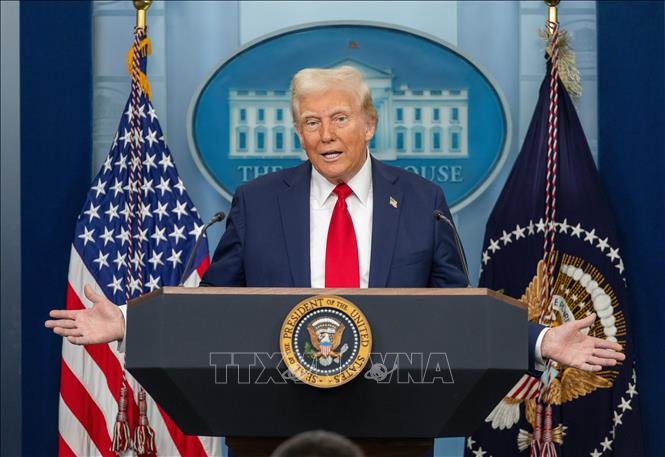
According to a VNA correspondent in South Korea, after concluding his trip to Asia last week without the expected meeting with Mr. Kim Jong Un, President Donald Trump affirmed that he will return to meet the North Korean leader. Previously, Mr. Trump had repeatedly expressed his desire to hold a meeting during this trip.
Analysts said that the US-North Korea meeting could take place in April next year, coinciding with the time when Mr. Trump arrives in Beijing after his summit with Chinese President Xi Jinping on the sidelines of APEC in Busan. Professor Yang Moo Jin, former president of the University of North Korean Studies, said the possibility is “completely realistic” as Pyongyang is expected to define its foreign policy for 2026 at the Workers’ Party Congress in January. According to him, Washington could take more concrete steps such as easing sanctions or reducing the scale of joint US-South Korea military exercises to encourage North Korea to return to the negotiating table.
On the same day, the South Korean Unification Ministry reaffirmed its support for US-North Korea dialogue, stressing that “opportunities for peace and dialogue on the Korean Peninsula still exist” and calling on Pyongyang “not to miss this strategic opportunity”. Seoul affirmed that it will continue to make efforts to promote dialogue and restore inter-Korean relations.
However, South Korean officials remain cautious about the possibility that the meeting between the two US and North Korean leaders could affect the goal of denuclearization, after President Trump once described North Korea as “a kind of nuclear power”, causing Seoul to worry that Washington might recognize Pyongyang’s nuclear status.
Some experts also warned that South Korea’s plan to develop nuclear submarines, which was recently approved by President Trump, could become a new variable in denuclearization negotiations. Although these submarines only use conventional weapons and do not violate the Nuclear Non-Proliferation Treaty (NPT), this move could increase Pyongyang’s argument for strengthening its strategic deterrence capabilities.